EN
EN



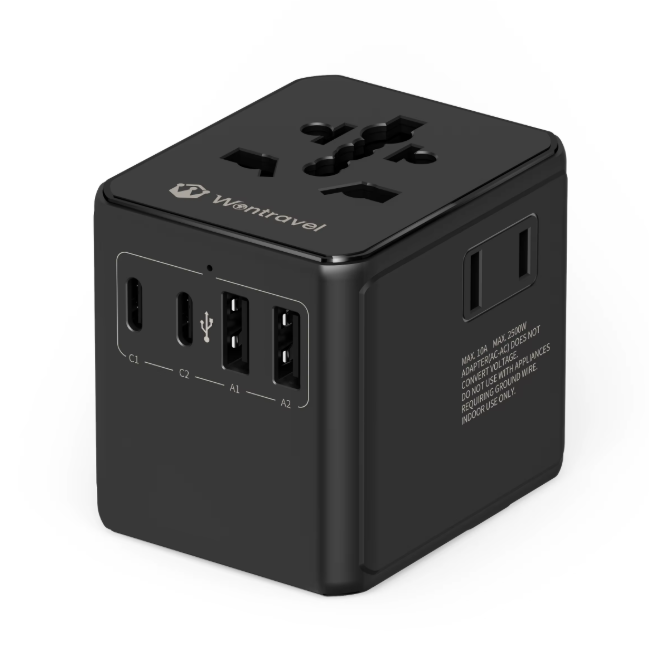
I used to carry a separate charger for every device. Phone charger, laptop brick, tablet cable. It took up so much space in my bag, and finding the right one was always a mess. Then I discovered a proper usb travel adapter, and honestly, I have never looked back. Let me walk you through why these little gadgets make traveling so much easier.
One gadget replaces a whole pile of chargers
Think about the last trip you took. How many chargers did you bring? For me, it was at least three. A big heavy one for the laptop, a smaller one for the phone, and maybe another for a power bank or headphones. That is a lot of stuff to keep track of.
A usb travel adapter changes that completely. Instead of carrying all those separate bricks, you just bring one compact device. It has built in USB ports right on the side, so you can plug your cables directly into the adapter itself. No more digging through your bag at the airport trying to figure out which charger belongs to which device. Everything connects to the same little cube.
Some of these adapters come with two, three, or even five USB ports. That means you leave all those individual wall chargers at home. Your bag gets lighter, and your morning routine gets simpler. You just plug everything into the adapter and let it do its job.
Charging multiple devices at the same time
Here is something that used to drive me crazy. Old school adapters only gave you one power outlet. If you needed to charge your phone and your laptop, you had to pick one. Charge the laptop first, then stay up late to swap in the phone. Or wake up in the morning to find your phone still half empty.
A modern usb travel adapter solves this problem beautifully. You get the regular AC outlet for your laptop, plus two or three USB ports for your phone, smartwatch, and earbuds. Everything charges together while you sleep. You wake up with all your gear ready to go.
I have seen adapters with up to seven ports in total. Some even have a mix of USB A and USB C, so old cables and new cables both work fine. No more choosing which device gets power. No more waiting your turn. Just plug and forget.
Less weight means a happier back
Anybody who travels a lot knows that every ounce in your bag matters. Airlines are getting stricter about carry on weight, and even when they are not weighing your bag, you still have to drag it through terminals and up hotel stairs. A lighter bag makes everything better.
A traditional setup might mean carrying a laptop charger, a phone charger, a tablet charger, plus a separate plug adapter for the wall. That adds up fast. A good usb travel adapter combines all of those into one small package. We are talking about a device that often weighs less than half a pound and takes up about as much space as a deck of cards.
That saved space can go toward something useful. An extra shirt, a pair of comfortable shoes, or maybe just less strain on your shoulder. When you are running through an airport to catch a connecting flight, you will thank yourself for packing light.
Safety features you do not have to think about
Electrical systems are different all over the world. Some countries use 110 volts. Others use 220 volts. Plugging the wrong thing into the wrong outlet can fry your device in a split second. I have seen it happen, and it is not pretty.
Good usb travel adapters come with built in protections that handle this for you. They are designed to accept input voltages from 100 to 250 volts, which covers pretty much every country on earth. Many also include surge protection, short circuit protection, and overcurrent protection. If something goes wrong with the power supply, the adapter takes the hit instead of your expensive laptop.
Some models even have replaceable fuses. That is a small touch that can save you a lot of trouble. Instead of buying a whole new adapter because something popped, you just swap out a tiny fuse and keep going. Simple, smart, and cheap.
What to look for when picking one out
Not every usb travel adapter is the same, so you need to know what to look for. The first thing is port count. Think about how many devices you normally travel with. If you just carry a phone and some earbuds, two USB ports are plenty. If you travel with a laptop, a tablet, a phone, and a watch, look for something with three or four ports.
Next, check the power output. USB A ports usually top out at 12 or 15 watts, which is fine for phones. USB C ports can go much higher, 30 watts, 65 watts, even 100 watts. If you need to charge a laptop through USB C, get an adapter with high wattage support. Otherwise your laptop might charge slowly or not at all.
Also look for certifications. Safety marks like CE, FCC, and RoHS mean the adapter has been tested and meets basic standards. A usb travel adapter without these marks might work fine, but why take the risk? Your devices are worth more than saving a few dollars.
The bottom line for travelers
Traditional adapters do one thing and one thing only. They change the shape of your plug so it fits into a foreign outlet. That is it. No extra ports, no safety features, no convenience. You still need all your original chargers, and you still have to juggle them.
A usb travel adapter does so much more. It replaces your chargers, adds extra ports, protects your gear, and saves space in your bag. For anyone who travels even a few times a year, the upgrade is a no brainer.
The first time you use one, you will wonder how you ever managed without it. Sitting in a hotel room with your laptop, phone, and watch all charging at once from a single device the size of a small candy bar. That is real convenience. That is why so many people have made the switch.