EN
EN



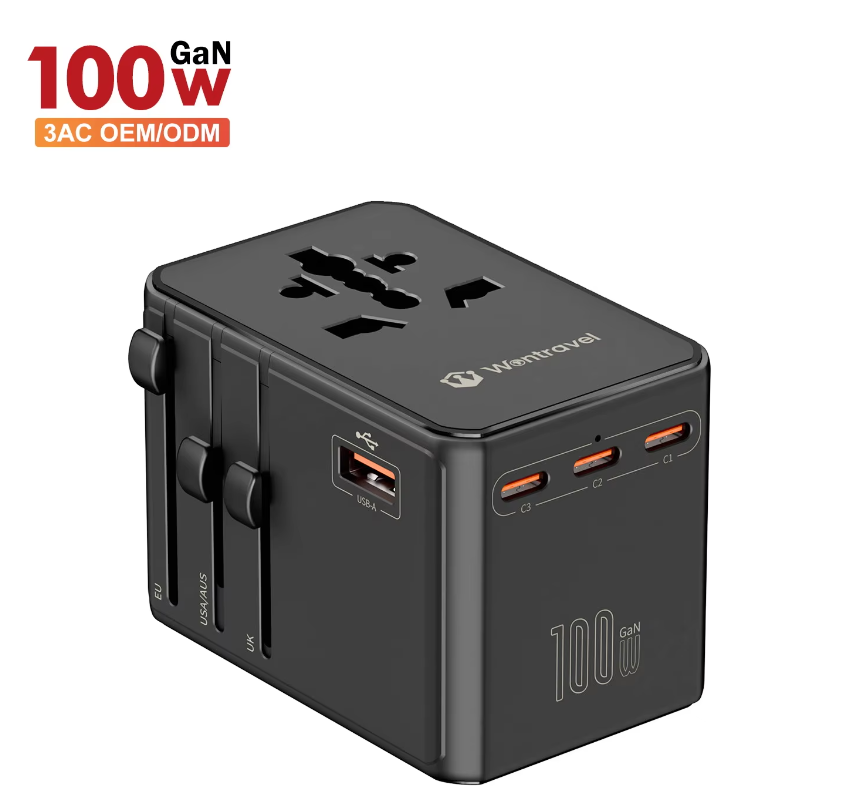
How Voltage Compatibility Defines a True Worldwide Travel Adapter
Voltage compatibility separates genuine worldwide travel adapters from limited regional alternatives. While many travelers focus solely on physical plug shapes, the critical factor is whether the adapter can safely handle the destination’s voltage—typically 100–127V in the Americas and 220–240V across Europe, Asia, and Africa. A true universal adapter features automatic voltage compatibility, accepting any input between 100–240V without manual switches. This wide range is essential: plugging devices into incompatible voltages risks irreversible electronics damage, fire hazards from overheating components, and unexpected shutdowns during critical use.
Contrary to popular belief, over 78% of travel-related electronics damage stems from voltage mismatch—not plug incompatibility (Electronics Safety Board, 2023). Adapters with robust voltage tolerance incorporate safety mechanisms like thermal fuses and surge protection that activate within milliseconds during voltage spikes. Without this protection, even a correctly shaped plug becomes a liability in countries with unstable grids. When evaluating adapters, prioritize models explicitly listing “100–240V input” over vague “international use” claims—this specification confirms true voltage-agnostic operation essential for seamless global travel.
Dual-Voltage Devices: What They Are, How to Verify Them Safely
Genuine dual-voltage devices—those engineered to operate safely on 100–240V AC—eliminate the need for external voltage converters, forming the foundation of safe, efficient worldwide travel. These electronics internally adjust to varying global currents, but travelers frequently misidentify compatibility, risking device failure or safety hazards.
Reading labels correctly: identifying genuine dual-voltage support
Check your device’s label, charger, or manual for these definitive markings:
- Input range: “100–240V” or “110–220V AC” confirms dual-voltage capability.
- Frequency tolerance: “50/60Hz” indicates adaptability to both major global power standards.
- If voltage specs are missing—or only “120V” or “230V” appears—assume single-voltage operation.
Critical: Verify labels physically on the device or its original charger—online manuals or retailer listings may be outdated or inaccurate.
Beware of misleading marketing: when ‘100–240V’ isn’t enough
Some manufacturers list broad voltage ranges without independent certification. Risks include inconsistent performance (e.g., overheating at 220V despite labeling), lack of built-in surge protection, and outright failure under load—especially with high-wattage tools like hair dryers or irons.
Safety step: Prioritize devices bearing FCC, CE, or UL certification marks—these verify compliance with recognized electrical safety standards.
Travel Adapter vs. Voltage Converter: Key Functional Differences
Adapters change plug shape only—never voltage (critical for worldwide travel adapter safety)
A travel adapter performs one function: modifying plug configuration to fit foreign outlets. It does not alter voltage, current, or frequency. This distinction is non-negotiable for worldwide travel safety. Plugging a 120V-only device directly into a 230V European socket—even with a perfectly fitting adapter—can cause immediate burnout, component failure, or fire. Most modern portable electronics (laptops, smartphones, tablets) are inherently dual-voltage (100–240V) and require only a physically compatible adapter. Always confirm voltage compatibility before travel—never assume plug fit implies electrical safety.
When you must add a converter: high-wattage and single-voltage devices abroad
Voltage converters are mandatory for single-voltage appliances (e.g., hair dryers, curling irons, coffee makers) and other high-wattage electronics that lack internal voltage adaptation. These devices operate exclusively at fixed voltages (120V or 230V) and require active transformation to match destination grid standards. Key considerations:
- Select a converter rated for at least 25% more wattage than your device’s maximum draw to prevent thermal overload.
- Devices exceeding 1,600W demand heavy-duty, transformer-based converters—not lightweight electronic types.
- Using single-voltage gear without conversion poses serious fire and shock hazards on incompatible grids.
Always pair certified voltage converters with appropriate travel adapters for complete, code-compliant protection when using non-dual-voltage equipment overseas.