EN
EN



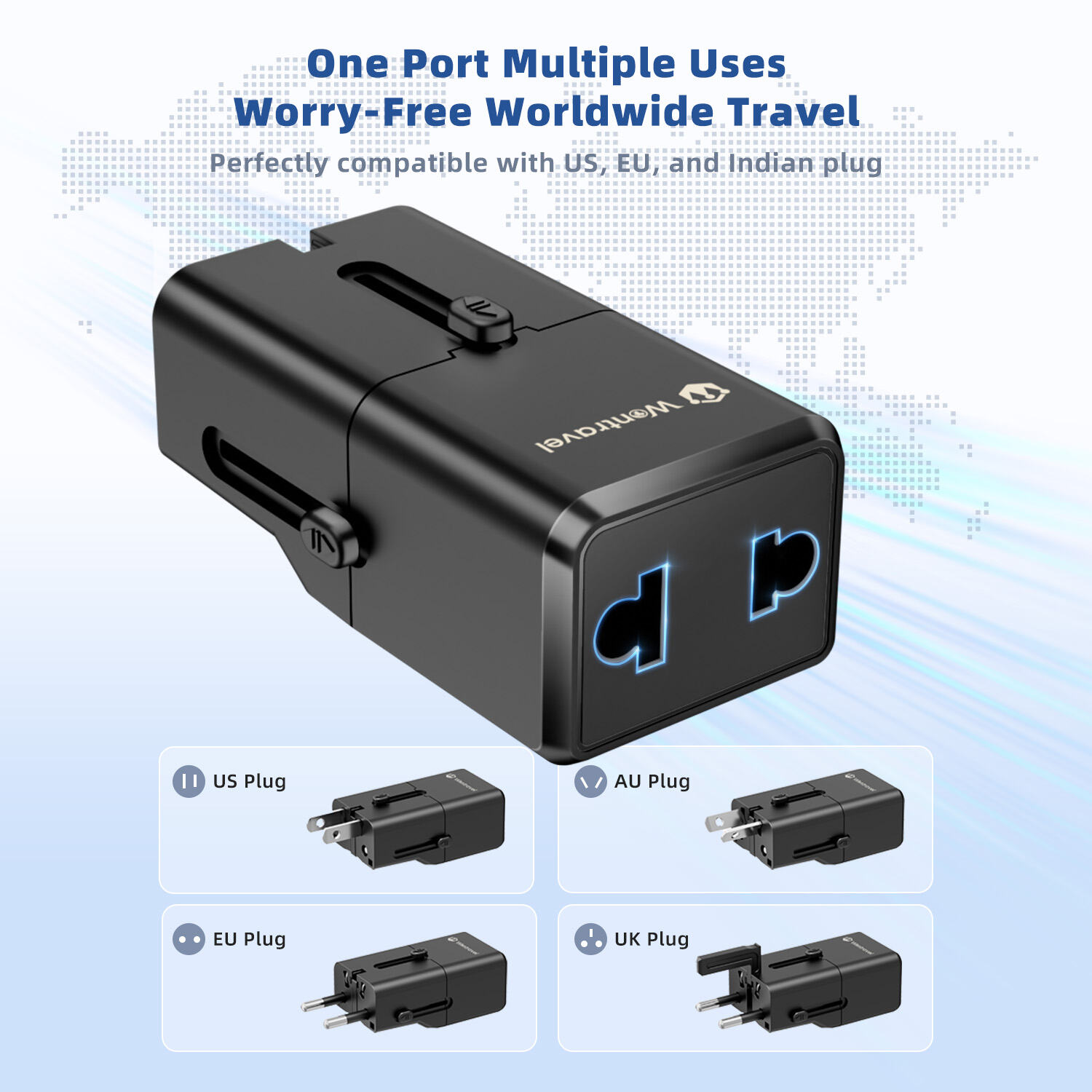
What Overload Protection Does for Universal Travel Adapters
Overload protection is a critical safety mechanism that prevents electrical hazards when connected devices draw more current than the adapter’s rated capacity. It continuously monitors power flow and instantly cuts off electricity if the load exceeds safe thresholds—such as when high-wattage appliances like hair dryers or laptops are used simultaneously. This rapid shutdown prevents overheating, melting of internal components, and potential fire ignition. Without it, sustained overloading could damage both the adapter and connected electronics—and pose serious electrocution risks. Modern universal travel adapters integrate this feature to ensure consistent safety across global voltage environments.
How Overload Protection Prevents Real-World Hazards
Fire, Melting, and Electrocution Risks from Exceeding Current Ratings
Exceeding an adapter’s current rating causes rapid heating of internal wiring and components. That heat can melt plastic housings, degrade insulation, and ignite nearby materials. In extreme cases, sustained overcurrent may trigger short circuits—creating exposed conductive paths that increase electrocution risk upon contact. Overload protection eliminates these dangers by interrupting power the moment the threshold is crossed, halting thermal runaway before physical damage occurs.
Why Multi-Device Use Amplifies Risk with Universal Travel Adapters
Travelers frequently plug multiple devices—laptops, phone chargers, hair dryers, and camera batteries—into a single adapter. While each device may seem low-risk individually, their combined current draw can easily surpass the adapter’s rating. A typical high-power hair dryer alone draws over 10 A, leaving minimal headroom for other electronics. This cumulative load transforms a convenient setup into a fire hazard. Overload protection acts as a failsafe, disconnecting all power the instant the total current crosses the limit—ensuring even unplanned multi-device use remains safe.
Key Safety Components: Fuses, Circuit Breakers, and Surge Integration
Internal Fuse Design: Rating, Response Time, and Replaceability
The internal fuse serves as the primary defense against overcurrent. Most universal travel adapters use fuses rated between 6.3 A and 10 A—the upper limit of what the unit is engineered to handle continuously. Fast-acting fuses respond in under 0.1 seconds, clearing faults before sensitive components are damaged. Replaceability is a key practical consideration: some models include user-accessible fuse holders, allowing travelers to swap a blown fuse without tools. Others embed the fuse permanently, requiring full replacement after failure. A replaceable fuse supports reliability and sustainability—especially valuable during extended trips where spare adapters may be unavailable.
Surge Protection as a Complementary Layer in Modern Universal Travel Adapters
Surge protection adds a vital second line of defense against brief, high-voltage spikes caused by lightning strikes or grid switching. Unlike fuses—which respond only to sustained overcurrent—surge protectors divert transient energy away from connected devices. Many modern universal travel adapters incorporate a metal-oxide varistor (MOV) across hot and neutral lines. When voltage exceeds its clamping threshold (e.g., 275 V), the MOV shunts excess energy to ground. Because fuses cannot react quickly enough to sub-millisecond surges, this complementary layer significantly reduces the risk of damaged electronics—particularly important in regions with unstable power infrastructure. Look for a surge energy rating of at least 300 joules to confirm meaningful protection.
Choosing a Safe Universal Travel Adapter: What to Verify Before You Buy
Certifications (UL/IEC), Dual-Layer Protection, and High-Risk Destination Readiness
Always prioritize adapters certified to recognized international standards such as UL 498 or IEC 60884. These certifications verify rigorous testing for insulation integrity, temperature control under load, and resistance to short circuits. Dual-layer protection—combining a replaceable fuse (minimum 6.3 A rating) with integrated surge suppression (≥300 joules)—is essential for safeguarding modern electronics from both sustained overloads and transient voltage spikes. For destinations with unreliable grids—such as parts of Southeast Asia, Africa, or Latin America—confirm compatibility with local plug types and wide-input voltage ranges (100–240 V AC). Adapters lacking auto-resetting fuses or region-specific certifications increase electrocution risk in unstable infrastructure environments, according to findings from independent electrical safety audits.