EN



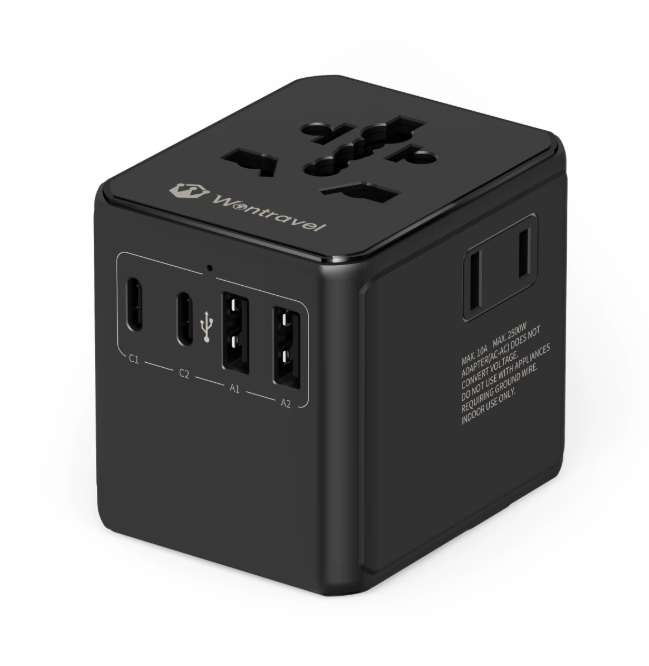
The shared power problem that frustrates frequent travelers
Most travelers have run into a version of this situation. A phone is charging from a multi-port USB travel adapter, then a laptop gets plugged into the second port, and the phone briefly stops charging or drops to a slow trickle. The total wattage printed on the adapter might be 65 or 100 watts, but the actual power delivery is controlled by a shared budget. When a new device appears, the charger reassigns available power, and that process often forces existing connections to renegotiate.
This behavior is not a defect. It is how many affordable multi-port chargers are designed. The two or three ports pull from one common DC bus, and a single controller manages the total output. The result is that all connected devices experience a reset or a voltage change when someone plugs in or unplugs something. For a traveler who needs a laptop running during a layover, that momentary interruption can be more than an annoyance.
What independent port control actually means
Independent port control on a USB travel adapter means each USB outlet has its own power conversion path, its own protocol controller, and its own current sensing. The ports still share the AC input and the physical housing, but the electrical output from one port does not pass through the control loop of another. That is a significant difference from a shared power design where the ports are essentially wired to the same output stage.
With independent control, each port can negotiate voltage and current with the connected device without affecting the others. A USB-C port delivering 20 volts to a laptop can maintain that voltage while another port starts a separate negotiation for 9 volts with a phone. No restart, no voltage dip, no interruption of data or charging.
Protocol negotiation should not be a group activity
Modern fast charging standards like USB Power Delivery 3.1 and Programmable Power Supply rely on a continuous digital conversation between the charger and the device. The device requests a specific voltage and current, the charger acknowledges, and both sides monitor the connection. If a shared controller resets to accommodate a new load, that conversation gets interrupted.
The USB Implementers Forum has published guidance on multi-port charging behavior in its USB Power Delivery specification documents. While the specification does not mandate independent controllers for every port, it describes the importance of maintaining stable power contracts and avoiding unnecessary renegotiation. Independent port control is one of the most straightforward ways to meet that goal.
A real-world case from a transit lounge
A project manager traveling through Singapore Changi Airport once noticed a consistent problem with a dual-port USB adapter. The first port was charging a lightweight notebook at 45 watts. The second port was empty. The moment a phone was plugged into the second port, the notebook screen flickered and the charging indicator switched off for about three seconds. The adapter was working as designed, but the shared output stage had to redistribute power.
After switching to a USB travel adapter with independently controlled ports, the same scenario produced no interruption. The notebook stayed at 45 watts, and the phone began charging at 18 watts on its own channel. The difference was not visible from the outside, but the internal architecture had changed. This example shows why independent control matters for travelers who need stable power while moving between flights.
How independent ports improve thermal behavior and longevity
Independent ports also make thermal management more predictable. In a shared design, the heat generated by one port can affect the components serving another. The PCB area around the power stage becomes a shared thermal zone. When one port runs at full load and the other is idle, the heat spreads unevenly, which can accelerate aging of capacitors and solder joints.
With independent channels, each power conversion stage operates within its own thermal envelope. Engineers can place temperature sensors and feedback loops closer to the components that actually need protection. The result is a more stable operating temperature and a lower chance of thermal shutdown under normal use. This does not mean an independent port adapter can exceed its total power rating, but it does mean the rated power is distributed more cleanly.
|
Feature |
Shared Power Bus |
Independent Port Control |
|
Inserting a second device |
May reset or reduce output to first device |
No effect on existing connections |
|
Voltage negotiation |
One controller for all ports |
Separate controller per port |
|
Thermal behavior |
Shared heat zone |
Isolated per channel |
|
Typical use case |
Light charging loads |
Mixed laptop and phone loads |
|
Cost to manufacture |
Lower |
Higher |
|
Stability under load changes |
Variable |
More consistent |
Not every multi-port adapter lives up to the claim
It is worth being direct about a limitation. Some products labeled as independently controlled are not truly independent in their internal design. They may have separate physical ports but still route power through a single output stage with only cosmetic separation. Checking teardown reports or manufacturer documentation can reveal whether each port has its own controller. Real independent control costs more to build, and that cost shows up in the final product.
Another honest point is that independent control does not create unlimited power. The total wattage is still limited by the AC input and the size of the internal power supply. A 65-watt adapter with two independent ports cannot deliver 65 watts to each port at the same time. It can, however, deliver stable and predictable power to each port within the overall budget, which is what most travelers actually need.
Wontravel has been developing this category of product since 2008, with in-house capabilities in electronic circuit design, mold making, injection molding, and final assembly. That control over the full production chain makes it easier to implement true independent port architectures and to verify them with consistent quality checks.
Table of Contents
- The shared power problem that frustrates frequent travelers
- What independent port control actually means
- Protocol negotiation should not be a group activity
- A real-world case from a transit lounge
- How independent ports improve thermal behavior and longevity
- Not every multi-port adapter lives up to the claim