EN
EN



The Socket Landscape Across France, Germany, and Spain
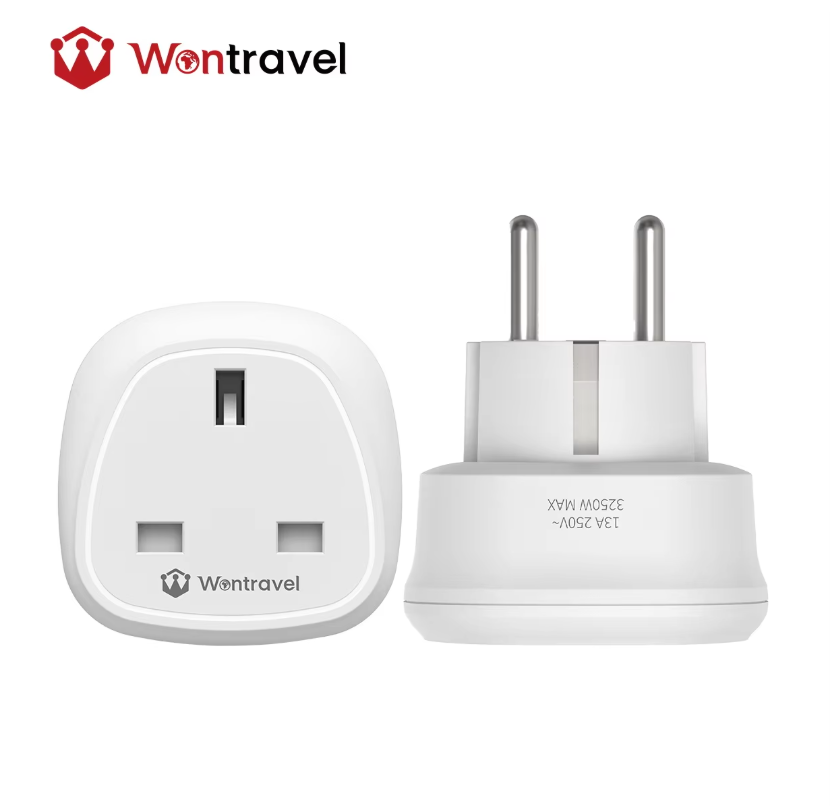
Walking into a hotel room in Paris, Berlin, or Madrid and reaching for a charger can trigger a moment of confusion that seasoned travelers know well. The wall socket staring back does not match the plug in hand. France, Germany, and Spain all operate on a 230-volt, 50-hertz electrical grid, and they share enough plug compatibility that a single, well-chosen adapter can serve across all three borders. The physical socket standards, however, are not identical, and knowing the nuance can prevent an unnecessary purchase at an airport kiosk. Germany and Spain use the Type F socket, often called the Schuko, which features two round pins for the live and neutral conductors plus two metal earthing clips on the sides of the recessed socket. France uses the Type E socket, which has two round pins and a male earthing pin that protrudes from the socket itself and inserts into a corresponding hole on the plug. The practical compatibility between these two standards is remarkably elegant. Most modern travel plugs designed for Europe combine a female earth receptacle to accept the French pin with side grounding contacts to mate with the German clips. This hybrid design, commonly referred to as a Europlug or a universal EU plug, fits securely into both Type E and Type F wall sockets. A traveler moving from a business meeting in Frankfurt to a weekend in Barcelona can carry a single adapter with confidence that it will fit every wall socket encountered along the way, provided it is built to the correct tolerance.
Understanding Voltage, Wattage, and Dual-Voltage Devices
Physical plug compatibility solves only half of the electrical equation. The other half involves the voltage and frequency that the connected device expects to receive. The European grid delivers electricity at a nominal 230 volts alternating current at 50 hertz, which is roughly double the voltage and slightly slower in frequency than the 120-volt, 60-hertz standard found in North America. A device designed for a single voltage will be destroyed within seconds if plugged into a European socket without a voltage converter, and the failure can be dramatic, involving smoke, melted plastic, and a tripped circuit breaker. The key to safe travel lies in reading the small print on every device and charger. Look for the input voltage specification, usually printed in fine type on the charger body itself. If it reads a range such as 100 to 240 volts and 50 to 60 hertz, the device is dual-voltage and only requires a physical plug adapter. Nearly all modern phone chargers, laptop power bricks, camera battery chargers, and personal grooming devices fall into this category. The devices that demand caution are those with heating elements or motors: hair dryers, curling irons, clothes steamers, and some electric shavers. These often operate on a single voltage and require a heavy, expensive step-down converter that most travelers are better off leaving at home in favor of a locally purchased or dual-voltage alternative. A travel adapter alone does not convert voltage, and assuming otherwise can lead to an expensive mistake.
The Engineering of a Safe and Reliable Travel Adapter
The internal construction of a travel adapter determines not only whether it works but whether it works safely over repeated use across different electrical environments. A well-engineered adapter begins with the conductor material inside the pins and sockets. Brass and phosphor bronze are the materials of choice for their combination of conductivity and spring retention. A cheap adapter might use thin, unplated steel stampings that oxidize over time, increasing electrical resistance at the contact point. This resistance generates heat, and sustained heat under load can soften the plastic housing and eventually lead to a short circuit. The fuse is the next critical safety feature, particularly for adapters designed to accept plugs from multiple countries. A quality adapter incorporates a replaceable fuse rated appropriately for the current it is designed to carry, typically 13 amperes for a UK-sourced unit. This fuse acts as a sacrificial point of failure that interrupts the circuit before the current reaches a level that could damage the building wiring or start a fire. Earthing continuity is equally important and frequently compromised in poorly made adapters. The adapter must pass the earth connection through from the wall socket to the device plug without interruption, because many appliances rely on the earth for safety against internal insulation faults. A plastic-bodied adapter that lacks any metal earth path or has a floating earth pin that is not actually connected provides a false sense of security. The mechanical integrity of the socket grip also matters. The spring contacts inside the adapter that receive the device plug should grip firmly enough to prevent intermittent disconnection when the adapter is jostled on a nightstand or plugged into a loose hotel socket.
USB Charging Integration and the Multi-Device Reality
The modern traveler rarely carries only one device. A typical backpack holds a smartphone, a tablet or e-reader, wireless earbuds, a smartwatch, and perhaps a power bank, all of which demand nightly charging. A travel adapter that combines physical plug conversion with integrated USB ports addresses this reality by consolidating what would otherwise be a tangle of individual chargers and cables competing for limited hotel socket space. The technical considerations for the USB portion of an adapter are not trivial. The internal power supply must convert the 230-volt alternating current input into a stable, low-voltage direct current output that meets the charging protocols of the connected devices. USB Power Delivery and Quick Charge standards rely on a digital handshake between the charger and the device to negotiate the appropriate voltage and current level. An adapter with properly implemented charging protocols can supply the right power profile for each connected device, from a low-current trickle for earbuds to a high-wattage fast charge for a laptop. Thermal management inside these compact units is a genuine engineering challenge. The conversion from high-voltage AC to low-voltage DC generates heat, and that heat must be dissipated through the plastic housing without exceeding safe touch temperatures. A quality adapter uses adequate internal spacing between components, proper heat sinking for the transformer and rectifier, and ventilation design that prevents thermal buildup during an overnight charging session. The total power budget across all USB ports also deserves attention. An adapter with multiple ports shares a limited total wattage, and plugging in several hungry devices simultaneously may result in slower charging across the board.
Packing Strategy and Everyday Use Across Borders
Experience teaches practical lessons that no specification sheet can capture. The first lesson is that hotel rooms in older European buildings often have a surprising scarcity of accessible sockets. The one free outlet may be behind the bed, under the desk, or tucked away in a corner that requires moving furniture. A travel adapter with a compact, low-profile design is less likely to be blocked by the headboard or desk frame. Some hotels, particularly in France, place sockets in the bathroom for electric shavers, but these are frequently limited to low-power devices and may be on a circuit that is switched separately from the room lighting. The second lesson concerns the physical weight of the adapter combined with the plugged-in charger. A heavy adapter dangling from a wall socket that has loosened over years of use will gradually pull itself out of contact, falling to the floor sometime during the night and leaving a phone uncharged by morning. An adapter with a relatively flat, lightweight profile avoids this frustration. The third lesson involves the universal socket mechanism found on many travel adapters. This mechanism uses sliding pins and spring-loaded contacts to accept plugs from different countries, which is convenient but introduces multiple internal connection points that can wear, loosen, or fail over time. A traveler who visits Europe frequently may be better served by a dedicated European adapter rather than a universal design, because the dedicated unit has fewer moving parts and fewer potential failure points. The simplicity of a fixed-pin European plug, built to a single standard rather than accommodating many, often translates to superior long-term reliability.
The Value of a Professionally Sourced Charging Solution
The difference between a travel adapter that survives years of journeys and one that fails during the first hotel check-in lies in the manufacturing discipline and supply chain quality behind it. An adapter is a product that carries mains electricity across international voltage levels, and the safety margins built into its design and production are not visible on a retail shelf. The use of fire-retardant engineering plastics, the precision of the pin dimensions that ensure a proper socket fit without arcing, and the soldering quality of internal connections all depend on factory-level process controls. Travel Charger, operating with a focus on power solutions for global travelers, brings an integrated approach to sourcing and producing these adapters. The manufacturing process involves rigorous inspection of conductor materials, testing of fuse integrity under load, and verification that the earthing path remains continuous under flex and thermal stress. For a retailer, a corporate travel manager, or an individual traveler who views reliable charging as essential infrastructure rather than a disposable accessory, the choice of a supplier with this level of professional accountability translates directly into peace of mind. A phone that charges reliably, a laptop that powers up for the morning presentation, and an adapter that does not overheat or spark are the quiet outcomes of an engineered product that was built to a standard, not a price point.
Table of Contents
- The Socket Landscape Across France, Germany, and Spain
- Understanding Voltage, Wattage, and Dual-Voltage Devices
- The Engineering of a Safe and Reliable Travel Adapter
- USB Charging Integration and the Multi-Device Reality
- Packing Strategy and Everyday Use Across Borders
- The Value of a Professionally Sourced Charging Solution