 ×
×
Why Should You Care About Plug Standards?
With global travel restrictions fully lifted, international business trips, family vacations, and in-depth explorations have once again become part of life. However, a perfect journey often begins with the most basic preparation—finding a safe and reliable "energy station" for your electronic devices. The significant differences in voltage, frequency, and even the physical design of plugs across countries and regions create invisible technical barriers during travel. A simple oversight could lead to a phone running out of battery, missing the chance to capture precious moments, or worse—burning out an expensive laptop due to voltage mismatch or causing safety hazards from using low-quality adapters. This guide aims to systematically outline the mainstream plug standards and core electricity knowledge for 2026, while providing a complete safety strategy from selection to usage. This way, no matter where you go in the world, you can stay prepared and fully powered.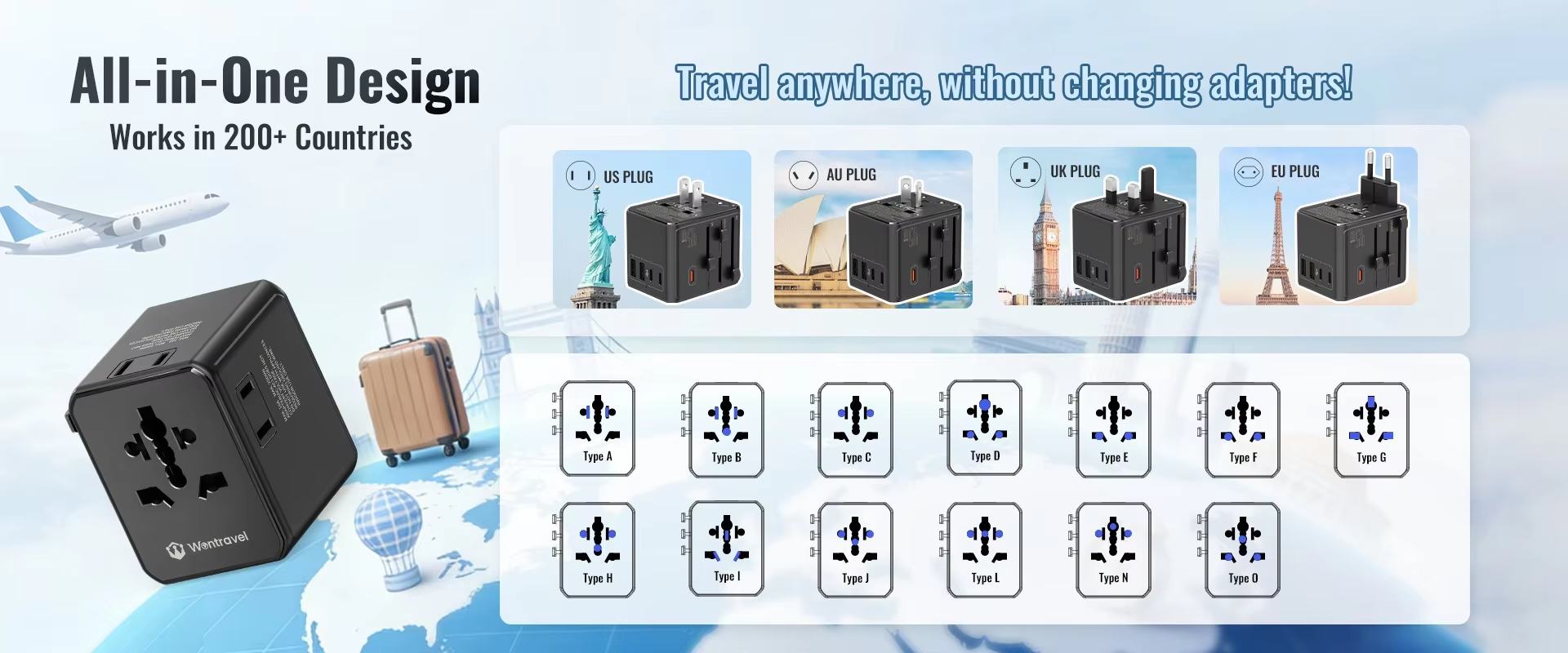
1. Overview of Global Plug Types: Understanding the Four Main Standards
Global plug standards can be broadly categorized into the following types. Be sure to confirm the type used at your destination before traveling:
①Type A (American Standard / NEMA 1-15)
Applicable Regions: United States, Canada, Mexico, Japan, Taiwan, Thailand (partial), etc.
Features: Two parallel flat pins, no grounding. Some newer outlets have differently sized slots to prevent incorrect insertion.
Voltage/Frequency: 110–120V / 60Hz.
Important Note: When traveling to regions like China or Europe (220–240V), a travel adapter is required, and devices must support wide voltage input.
②Type B (American Standard with Grounding / NEMA 5-15)
Applicable Regions: Same as Type A, commonly found in newer buildings or for high-power appliances requiring grounding.
Features: Adds a round grounding pin to the Type A design.
Compatibility: Type A plugs can fit into Type B outlets, but not vice versa.
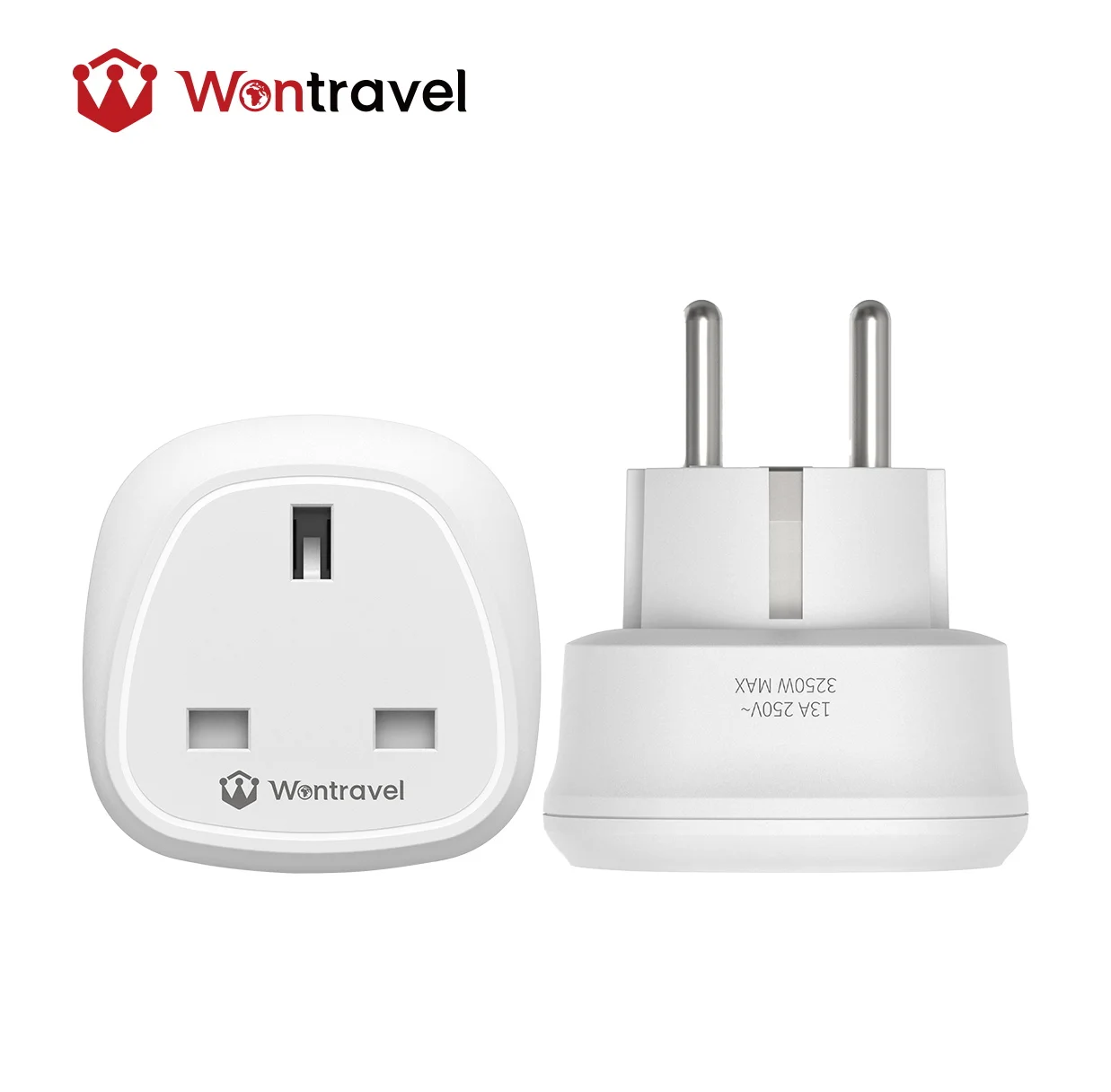
③Type C (European Standard / Europlug)
Applicable Regions: Most continental European countries (e.g., France, Italy, Spain, the Netherlands), parts of Asia (South Korea, parts of Indonesia), and some South American countries.
Features: Two round pins, the most common "European travel plug." Note: It does not support grounding. In safety-conscious countries like Germany and Austria, it has largely been upgraded to grounded Type E or F (also known as "Schuko") outlets.
Voltage/Frequency: 220–240V / 50Hz.
④Type E & F (French/German Standards)
Features: Both are compatible with Type C plugs but include grounding (Type E has a protruding female socket, while Type F has side metal clips).
Applicable Regions: Type E is mainly used in France, Belgium, Poland, etc.; Type F is widely used in Germany, Austria, the Netherlands, etc.
Safety Upgrade: Provides grounding protection for appliances like washing machines and refrigerators, commonly seen in fixed hotel outlets during travel.
⑤Type G (British Standard / BS 1363)
Applicable Regions: United Kingdom, Ireland, Hong Kong, Singapore, Malaysia, the Maldives, etc.
Features: Three rectangular pins with a built-in fuse, offering high safety. Each plug contains a replaceable fuse.
Voltage/Frequency: 220–240V / 50Hz.
Safety Tip: Always use a compliant adapter. Never force plugs of other standards into these outlets, as it may damage the socket or cause hazards.
⑥Type I (Australian Standard / AS 3112)
Applicable Regions: Australia, New Zealand, Argentina, China (the Chinese GB 2099.1 standard is similar but with slight differences in pin angle and size; they are generally interchangeable), Fiji, etc.
Features: Two V-shaped pins or three pins (including grounding).
Voltage/Frequency: 220–240V / 50Hz.
Other Important Types:
Type D & M: Mainly used in India, South Africa, etc. Type D has three round pins in a triangular arrangement, while Type M has thicker pins. Important Note: With standard updates, many new locations in India also support Type C/E/F. However, for safety, it is advisable to carry an adapter compatible with Type D/M when traveling to South Asia.
Type O (Thai Standard): Unique to Thailand. Compatible with Type A/B/C, but it’s best to bring your own adapter.
Type N (Brazilian Standard): Used in Brazil, with pins similar to Switzerland’s Type J but of different dimensions.
2. Key Points on Voltage and Frequency
Voltage: Globally, voltages are mainly divided into two ranges: 110V–127V (e.g., USA, Japan) and 220V–240V (e.g., China, Europe, Australia). Before traveling, check the label on your appliances—especially those with motors or heating elements like hair dryers, curling irons, or electric shavers—to confirm if they support "100V–240V" wide voltage input. If not, you will need a voltage converter to prevent damage.
Frequency: Typically 50Hz or 60Hz, which has minimal impact on most modern electronic devices (e.g., phone and laptop chargers).
3. Golden Rules for Safe Electricity Use While Traveling
Safety should always come first. Follow these principles:
①Avoid Overloading: Do not connect too many high-power devices to a single adapter or outlet to prevent overheating and fire risks.
②Keep Dry: Never use exposed adapters to charge devices in damp environments like bathrooms.
③Choose Products with Safety Certifications and Protections: Prioritize adapters with features like overload protection, flame-retardant materials, and child-safe shutters—similar to our products—for added safety on your travels.
④Proper Unplugging: Always pull the plug itself, not the cord.
4. How to Choose the Best Companion for Your 2026 Journey?
Based on different travel needs, here’s a clear selection guide:
Classic Single-Country/Region Trip: If your destination is clear and singular (e.g., only the USA), a single-standard adapter is the lightest and most economical choice.
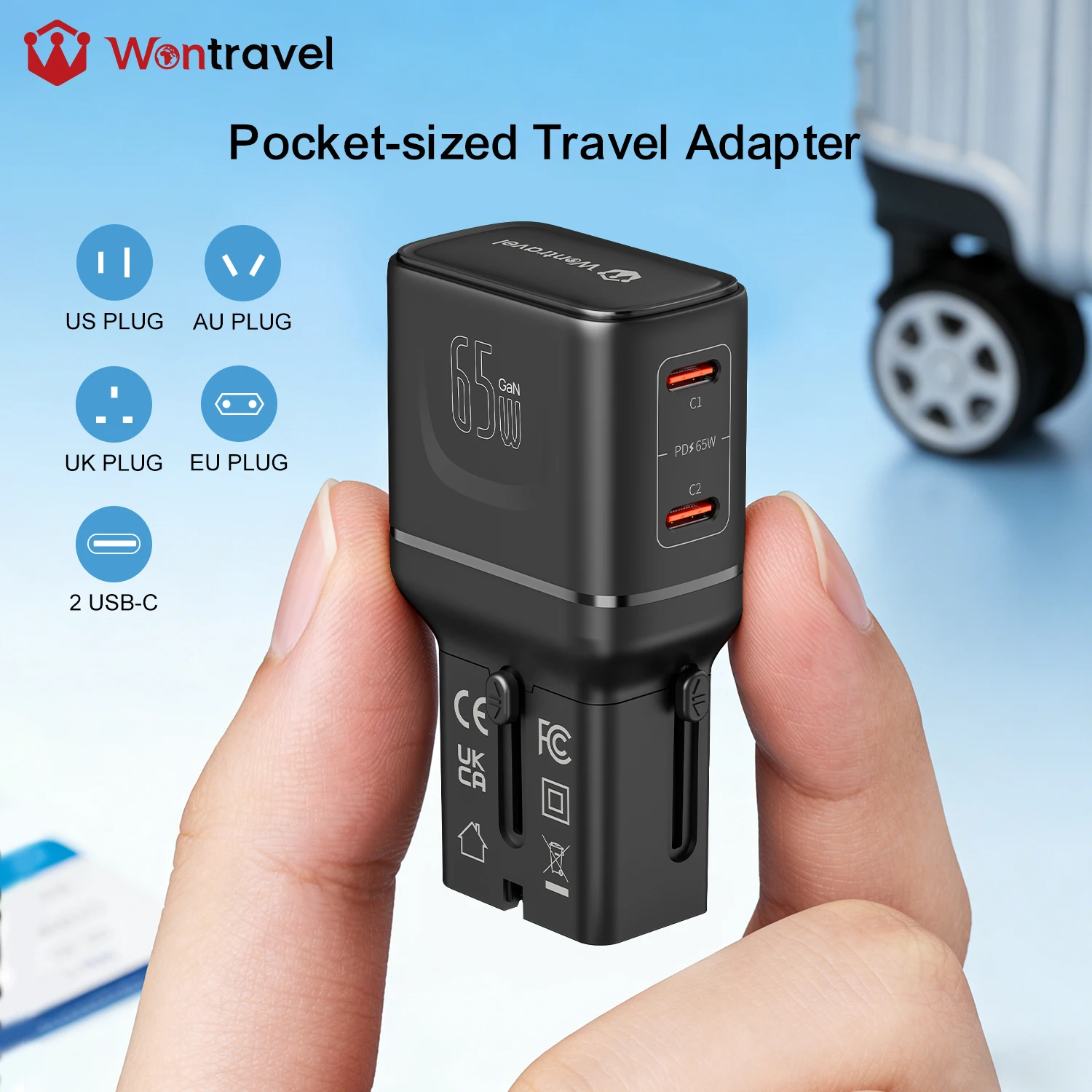
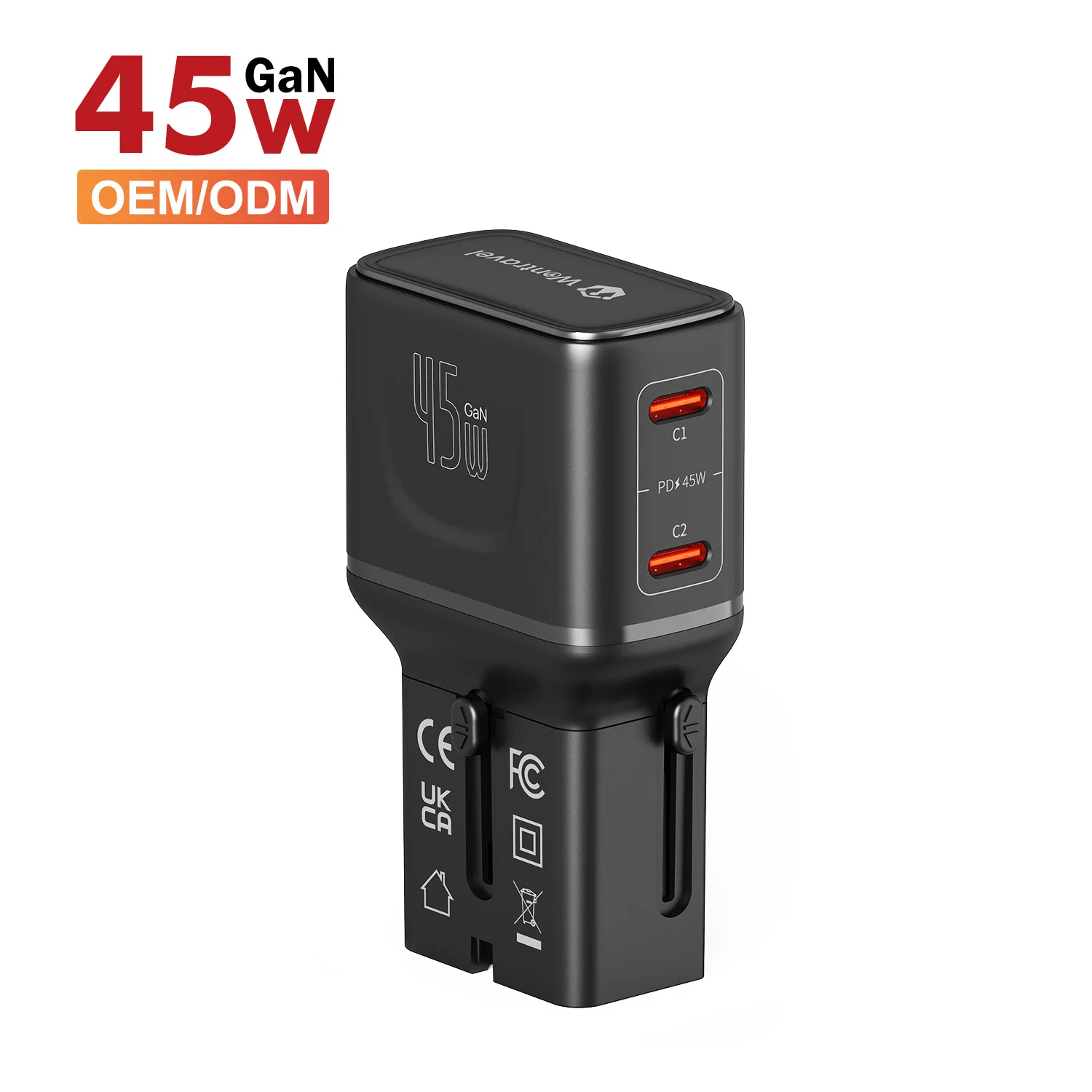
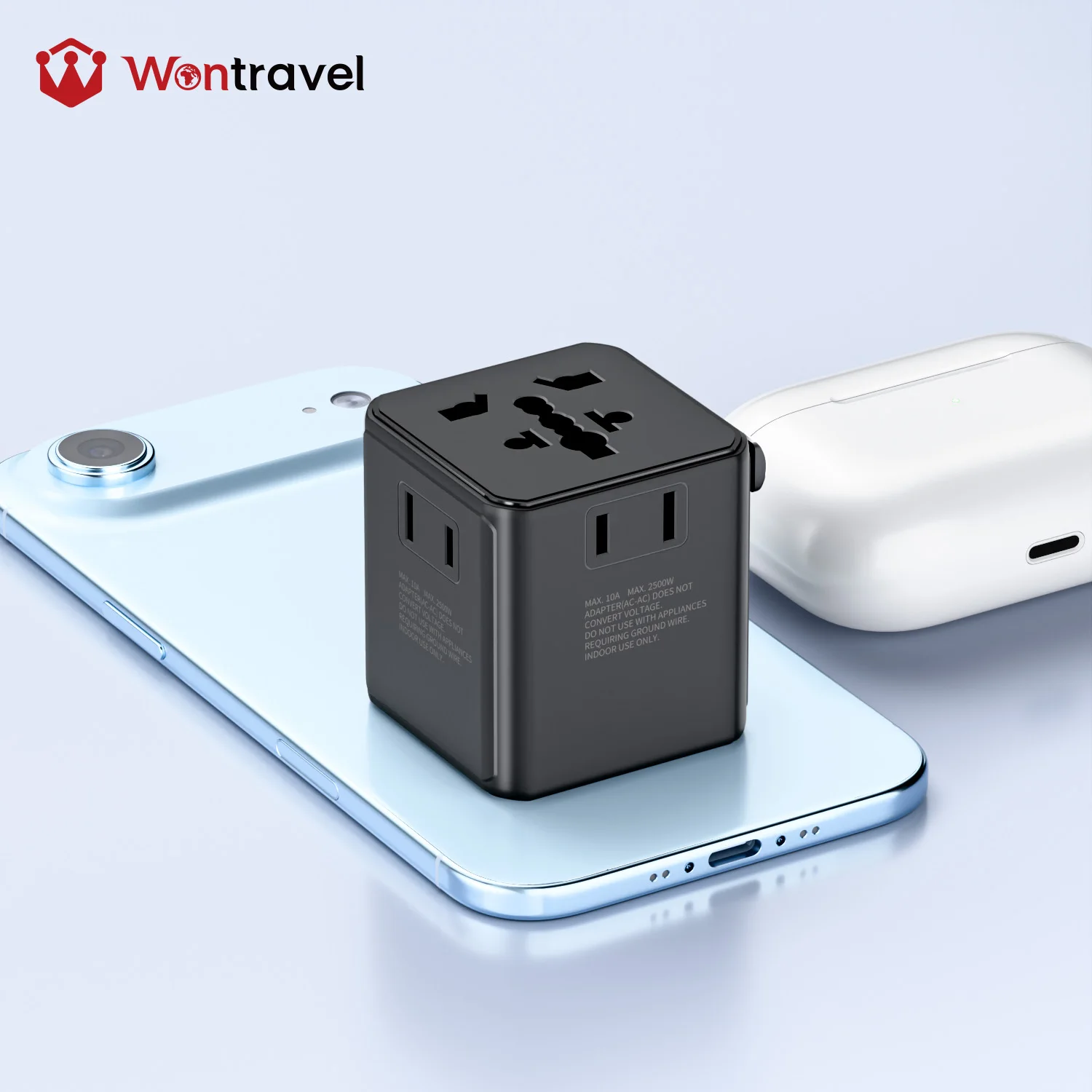
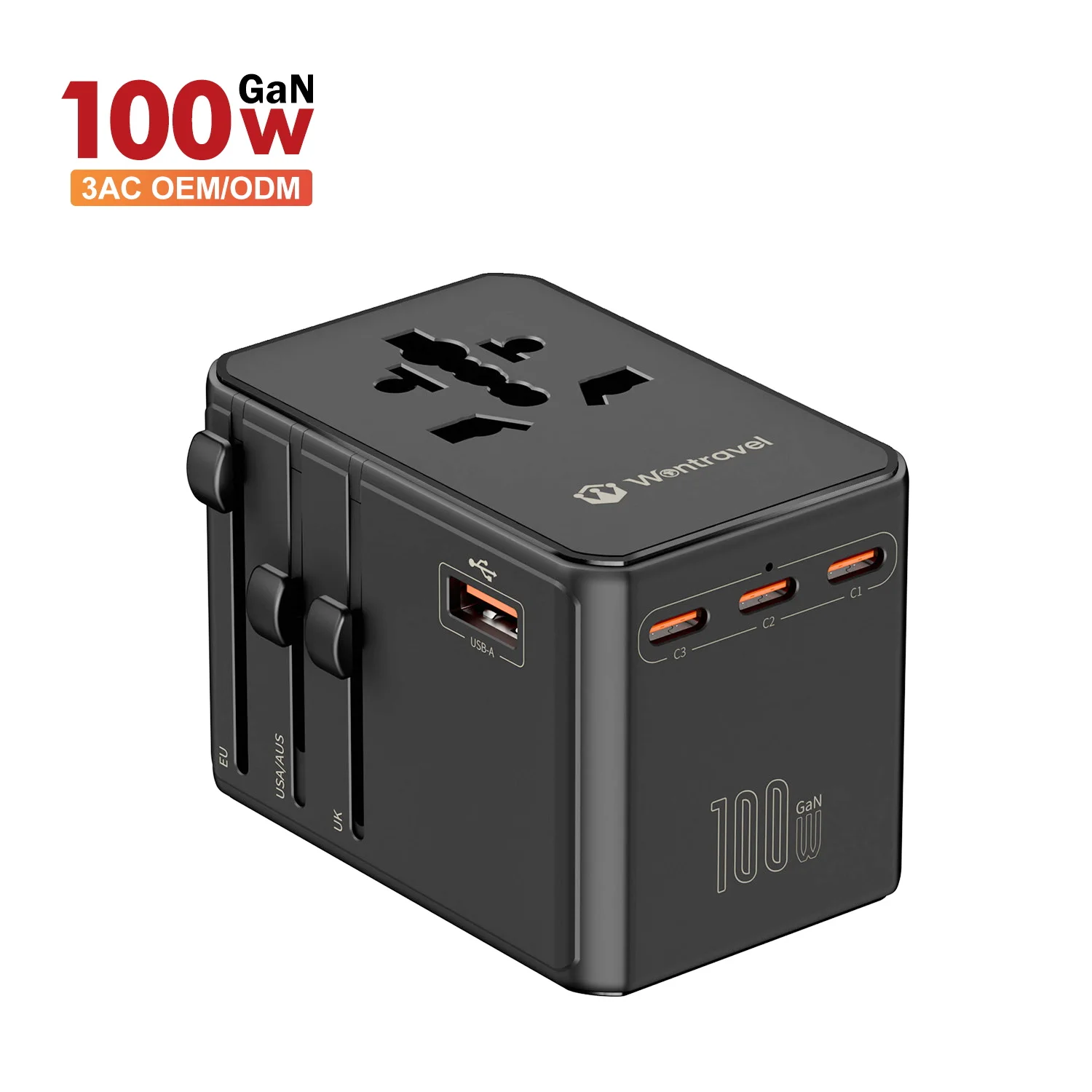
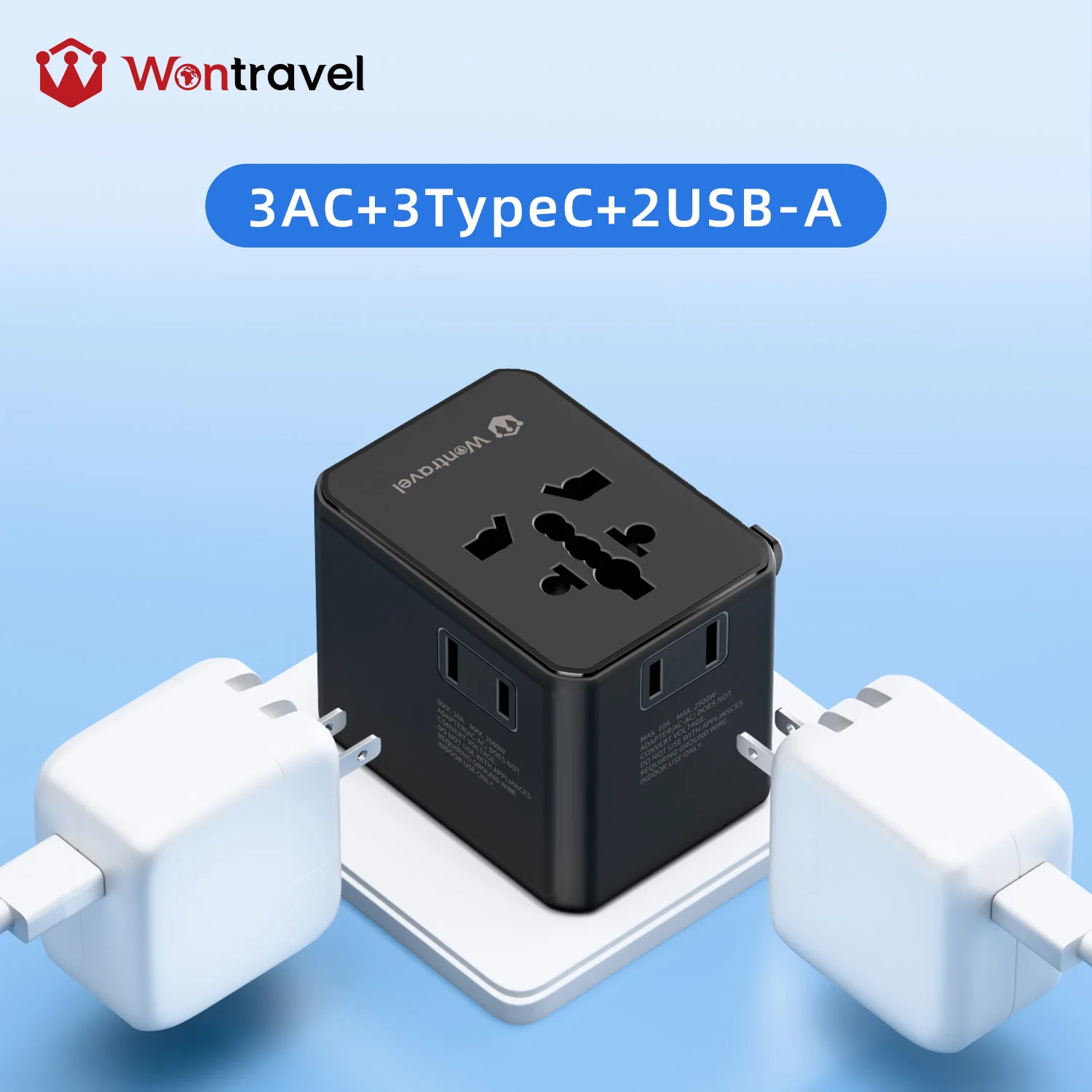
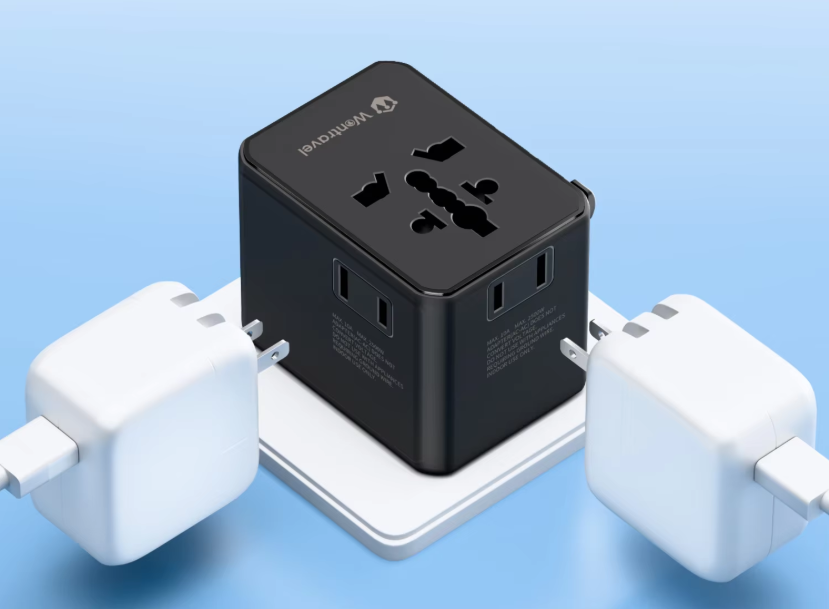
Multi-Country Travelers or Frequent Flyers: We highly recommend a universal all-in-one adapter. A GaN adapter with multiple AC outlets (like our 3-AC design) and a built-in retractable cable version as backup truly enables "one plug for the world."
Modern Travelers with Numerous Digital Devices: For users who need to charge phones, tablets, cameras, and headphones simultaneously, an adapter with 75W+ power, USB-A/USB-C fast-charging modules, and 3 AC outlets eliminates the hassle of carrying multiple chargers.
5. Pre-Trip Quick Checklist
①Confirm the plug type(s) of your destination country/region (A/B/C/E/F/G/I, etc.).
②Confirm the voltage of your destination (110V or 220V).
③Check the input voltage range of all devices you plan to bring (whether they support 100–240V).
④Choose the appropriate adapter type (single-country/global universal/multi-port fast-charging) based on your itinerary and device count.
⑤Ensure the adapter has safety certifications and protective features.
⑥Prepare a lightweight power bank as a backup solution for critical devices.
The world is vast and worth exploring. Thorough preparation for electricity usage is the technical assurance for a worry-free journey. We hope this 2026 guide helps you overcome charging obstacles during travel. In today’s fast-evolving technological landscape, choosing a brand like Wontravel—committed to solving user pain points through innovation—means you’re not just selecting an adapter but also gaining the confidence to embark calmly and the peace of mind that accompanies you throughout your journey.
Wishing you smooth connections and fully charged devices on every trip in 2026!
 Hot News
2026-02-05
2026-02-04
2026-02-03


 EN
EN