EN
EN



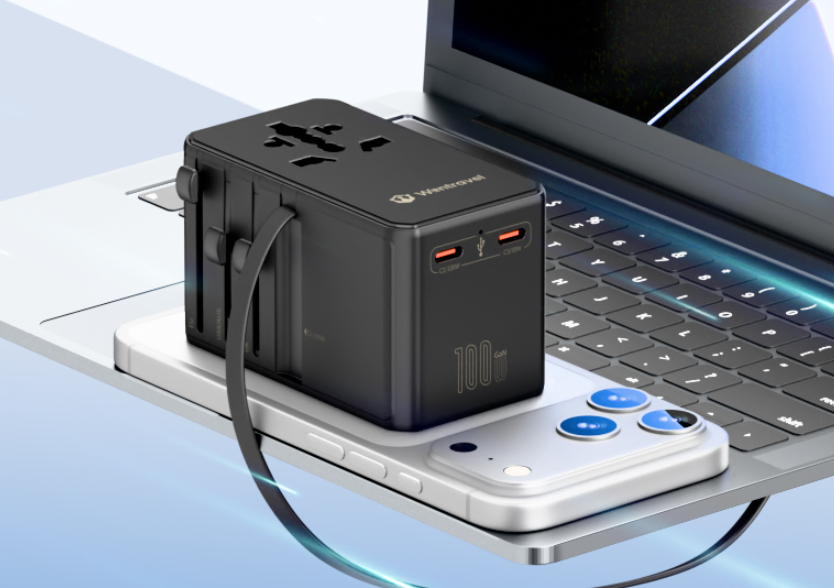
You have packed all your bags, confirmed your flight, checked your passport, and of course, you head out to your destination outside of the country. Eventually, you get to your accommodation, pull out your cell phone, and realize you will be unable to charge your phone as the plug is not the same as the ones you have in your country. Now, charging your phone is becoming a problem.
This is a problem for thousands of travelers every single day. Different countries have different plug shapes and designs for their sockets. A plug that fits in the sockets in the USA might not fit in the UK ones. The same goes for Europe and Australia. That is why a travel adapter is one of the most important things you should have in your bag when traveling internationally. Without one, you might as well be toting around expensive bits of plastic.
Plugs are not the same everywhere
As you first consider traveling internationally, you must understand that not all regions use the same plug sockets. When an electrical system is developed, the plug is a result of the developments made by the region during that time. For example, North America uses Type A and Type B systems, which consist of two flat pin plugs, or two flat pins with an additional grounding pin. Europe has a similar system with Type C and Type F plugs; however, these consist of two round pins. The United Kingdom uses a Type G plug, which has a system of three rectangular pins in a triangular configuration. Australia has Type I plug systems, which consist of two flat pins that are V shaped, along with an additional grounding pin.
If you have ever tried to use an American charger with a UK plug, you would have noticed that there is a considerable amount of difficulty, as the shape of the plug would not allow the charger to even fit inside the socket. Without the proper travel adapter that has the right shape to bridge the gap, you would not be able to connect in different regions without modifying any of the electronics.
Voltage differences can damage your devices
In different countries, the shape of a plug can vary, but one of the most dangerous differences is the voltage. Some continents such as North America, and parts of Asia and South America, use 110V to 120V. However, the rest of the continents that include Africa, Australia, and the majority of Europe and Asia use 220V to 240V. This means that if you try to plug a device that was designed to be used in a 110V outlet into a 220V outlet, the device can overheat, fry its internal circuits, or even catch fire.
Most modern electronics such as phone chargers, laptop power adapters, and camera chargers are designed to take in both of these voltages. If you see a label that states "Input: 100V–240V," you can use a plug adapter to switch a device from one type of plug to another. If you do not see that label, then the only option is to use a voltage converter, or a travel adapter that has built in voltage conversion.
High quality travel adapters are designed to work with different voltage systems. They safely pass the local voltage to your devices as long as your devices are rated for it. This is why it is crucial to check the device labels before you travel.
Keeping your devices charged and ready
Depending on how you choose to travel, your phone, laptop, camera, action cam, and other devices can be essential tools. If you cannot charge your devices, it can get very complicated. No phone means no maps, no ridesharing apps, no communication with your hotel, or highly frustrating travel arrangements. The same goes for your laptop; work deadlines can be really stressful to manage and travel plans can be frustrating to lose.
A travel adapter is vital to keep your devices charged, no matter where you go. It connects your devices to the wall outlet to keep you powered.
Multiple devices mean multiple charging needs
Using multiple devices means dealing with all the charging cables. These can be a phone, a tablet, a laptop, a camera, a portable battery, and even a smartwatch and earphones. These all need to be charged, often at the same time. A basic travel adapter with a single outlet might not be enough.
Many modern travel adapter models come with one or more AC outlet options and multiple USB ports. Some even incorporate up to three AC outlet ports into a single design, allowing you to charge multiple devices at once from a single wall outlet. Instead of having to pack multiple adapters or power strips, you can pack one that covers all of your needs.
Avoiding the hassle of buying adapters on the road
You can often purchase a travel adapter at your destination, although there are many issues. Airport stores and convenience stores are expensive; supply and demand gives the seller a monopoly to charge whatever they like. You may end up with an adapter of unreliable quality that could be unsafe or break very quickly. If you have just arrived at your destination, finding a store that sells adapters and is open could also be a hassle.
Bringing your own travel adapter means you do not have to do all the adapter hunting at your destination. You can get everything sorted before you leave, which saves time and avoids the risk of spending more than you should. You have your adapter when you need it, and you know it works because you have tested it.
Safety features protect you and your devices
Not all travel adapters provide the same level of safety. Cheap, uncertified adapters are made with subpar materials and are likely to overheat, catch fire, or break, posing serious safety risks to users.
A quality travel adapter that has passed safety testing for certifications such as CE, FCC, and others like RoHS, ETL, UL, KC, or BSMI can be trusted to be overall safer. These adapters are made with fire resistant materials and provide proper insulation, as well as proper internal design to reduce the risk of overheating. They also have built in fuses to protect against power surges. When traveling to destinations with different or less familiar electrical systems, staying safe is important.
One adapter for multiple countries
Carrying multiple adapters for different countries can be cumbersome and add weight to your luggage, while a travel adapter designed for multiple countries can save you that space.
A travel adapter equipped with all four essential plug types (US, EU, UK, and AU) can be used in over 200 countries and territories. This means one adapter will suffice whether you are traveling through Southeast Asia or making a trip to both Paris and London. You do not need to remember which adapter goes to which country, and you do not need to carry a bunch of different adapters for different stops.
Protecting your electronics investment
If you own an expensive laptop, camera, or phone, you probably want to keep them instead of having to pay to replace them. A reliable travel adapter makes it possible to make a connection to the local power supply that is safe and stable, thereby helping protect your investment. It helps reduce the risk of damage caused by voltage mismatches, power surges, and bad connections.
When traveling, you need to worry about enough things already. Messing with the power supply should not be one of them. A good travel adapter gives you one less thing to stress over.
What to look for when choosing
When selecting a travel adapter, consider the features first. A universal travel adapter must have the plug types you need. Good adapters have US, EU, UK, and Australian plugs, which cover most of the world. Next, consider the power rating. If you need to charge a laptop or use a hair dryer, the adapter must handle higher wattage. Port availability varies. USB ports and multiple AC outlets let you charge several devices at once. Also consider size. A compact adapter will not add much weight and will fit easily into your bag.
Conclusion
A travel adapter is not a luxury. It is a necessity for anyone traveling internationally. It handles voltage differences when paired with the right devices, keeps your electronics charged and ready, saves you from hunting for adapters after you arrive, and protects your valuable devices with built in safety features.
Quality travel adapters are small but vital parts of your travel equipment. They keep your devices useful, and your travel adaptable and flexible, by keeping you powered and connected. Make sure to pack one before your next international trip.
Table of Contents
- Plugs are not the same everywhere
- Voltage differences can damage your devices
- Keeping your devices charged and ready
- Multiple devices mean multiple charging needs
- Avoiding the hassle of buying adapters on the road
- Safety features protect you and your devices
- One adapter for multiple countries
- Protecting your electronics investment
- What to look for when choosing
- Conclusion